Polystyrene printing and marking solutions.
Marking on EPS and HIPS for packaging and industrial applications
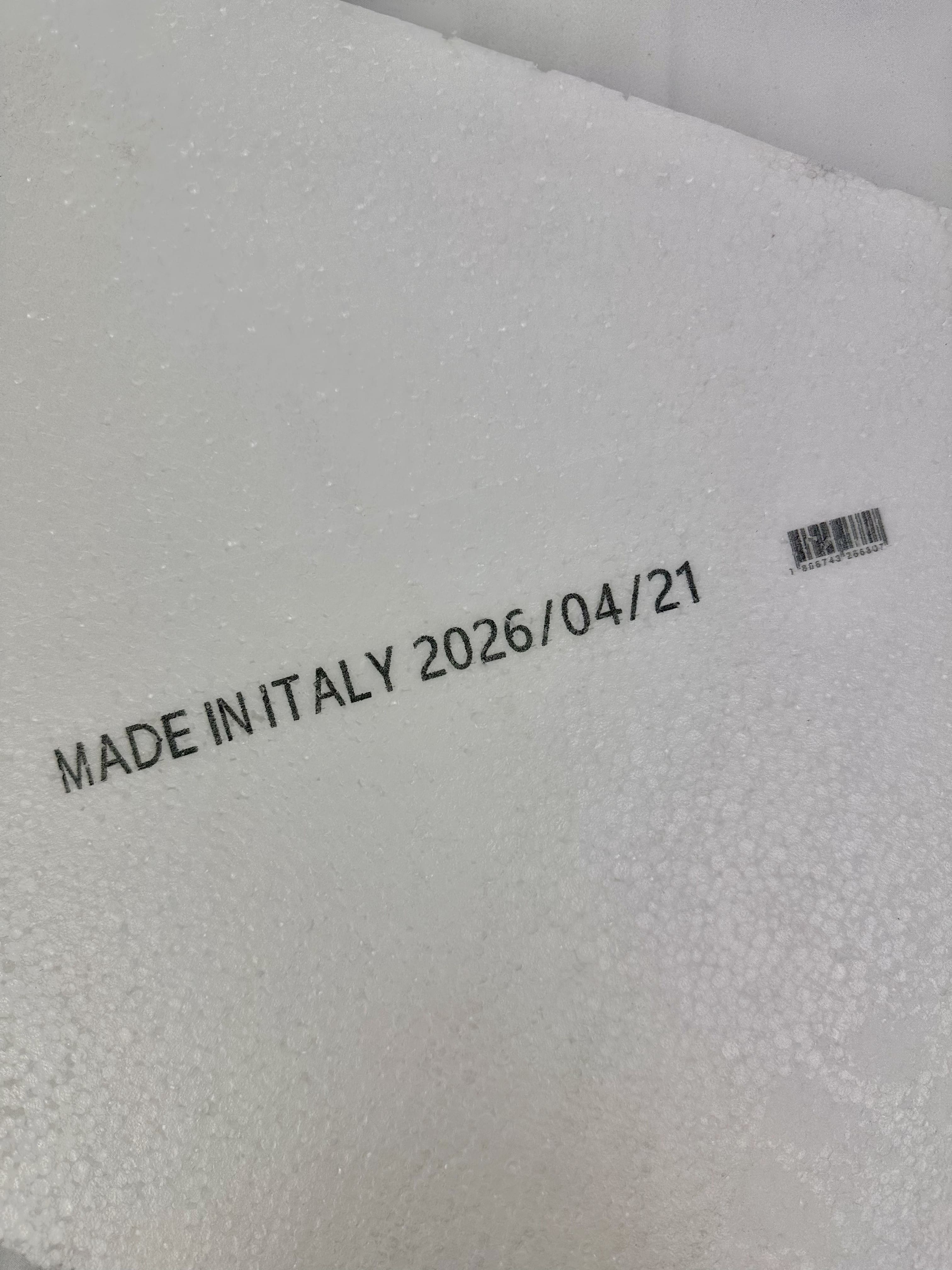
Expanded polystyrene (EPS) and high-impact polystyrene (HIPS) are sensitive materials that react negatively to many solvents, significantly limiting the range of applicable printing technologies. Marking on polystyrene containers for food, protective packaging, or technical components must be carried out using systems with low chemical impact. Water-based inkjet systems or light solvent inks compatible with the material, combined with CO₂ laser marking, are the most widely adopted solutions. Line speed and substrate geometry further influence system selection.
Explore solutions for the food industry.
Chemical compatibility: the critical factor for polystyrene
One of the most common mistakes in marking polystyrene is the use of inks with aggressive solvents such as MEK, acetone, or toluene, which chemically degrade the material, causing cracking or surface melting. For this reason, ink selection must be validated through compatibility testing before production starts. CO₂ laser marking, as an alternative, does not require inks and creates a clean, non-contact engraving without chemical interaction. High-speed automatic lines typically rely on CIJ systems with dedicated formulations, while for low-volume production, desktop inkjet systems offer a cost-effective solution. Explore technical consulting to select the most suitable ink.